Astronomers Discover Strange Planetary System Built From Inside-Out
Astronomers have spotted a planetary system that breaks the rules most scientists grew up with. The system circles the red dwarf star LHS 1903, and its layout looks wrong at first glance. The outermost planet is rocky, not gaseous, and that detail has researchers rethinking how planets form.
For decades, scientists leaned on a tidy model based on our own solar system. Small rocky worlds sit close to the star, while bloated gas giants drift in the colder outskirts. LHS 1903 does not follow that script, forcing a fresh look at planet formation itself.
In our solar system, the pattern feels logical. Mercury, Venus, Earth, and Mars hug the Sun, and they are dense and rocky. Jupiter and Saturn float far beyond, loaded with thick atmospheres made of gas and ice.
This setup fits with how stars and planets are thought to form. Close to a young star, heat and radiation blast away light gases, leaving heavy elements behind. Farther out, the colder region allows gas and ice to accumulate, helping giant planets grow rapidly.
The Strange Layout Around LHS 1903
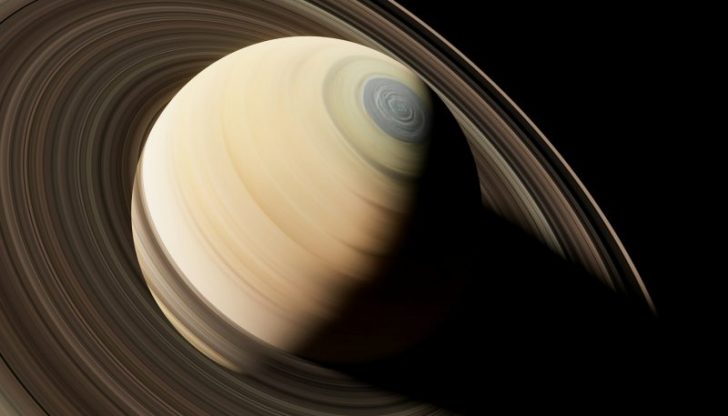
Planet / Unsplash / Mercury, Venus, Earth, and Mars hug the Sun, and they are dense and rocky
NASA’s Transiting Exoplanet Survey Satellite first spotted three planets orbiting it.
Those first three looked fairly normal. The innermost world is a rocky super-Earth. Beyond it sit two sub-Neptunes, both wrapped in thick layers of gas. At that point, nothing seemed unusual. The structure felt familiar, with rock close in and gas farther out. The twist came later when researchers looked closer.
An international team led by Thomas Wilson at the University of Warwick used the European Space Agency’s CHEOPS telescope, along with data from eight other observatories. Their deeper look revealed a fourth planet at the edge of the system. That planet, named LHS 1903 e, turned out to be rocky.
The final lineup reads like this: rocky, gaseous, gaseous, rocky. That order stunned researchers. No one expected to find a dense, rocky super-Earth parked beyond two gas-rich planets.
Scientists first checked if the outer planet had once been a gas giant that lost its atmosphere. Maybe intense radiation from the star stripped it bare. Maybe a violent collision blasted its gas into space.
Computer simulations did not support that idea. If such a harsh event had happened, it would likely have damaged the two inner gas planets as well. Those planets still hold their thick atmospheres, which weakens the stripping theory.
Researchers also explored the idea that the rocky planet formed closer to the star and then migrated outward. Orbital calculations made that scenario look unlikely. The system’s motions simply do not support such a dramatic shuffle.
With common explanations falling apart, scientists needed a new one.
Born One By One, From the Inside-Out
Boli / Unsplash / The team now suggests that the planets around LHS 1903 formed in sequence, not all at once. Instead of emerging together from a single swirling disk, each planet may have formed one after another.
The process likely began close to the star and moved outward over time.
In this model, the first planet formed near the inner edge of the disk of gas and dust. As it grew, it interacted with the disk and drifted slightly inward. That movement cleared space in the disk, making room for another planet to form a bit farther out.
This pattern could have repeated several times. Each new planet formed in a disk that had changed since the previous one. Over time, the gas in the disk thinned out.
The two middle planets formed while plenty of gas still lingered. They gathered thick atmospheres and became sub-Neptunes. By the time the outermost planet took shape, most of the gas had vanished.