Fossilized Teeth Reveal Bizarre 425-Million-Year-Old Apex Predator
A bizarre fossil from southern China has forced scientists to rethink the early history of vertebrates. The fossil belongs to a fish called ‘Megamastax amblyodus,’ a creature that lived about 425 million years ago during the Silurian period. Its name means “big mouth with blunt teeth,” yet that description barely hints at how unusual this animal really was.
Researchers first knew this species from a few broken jawbones discovered years ago. Those early fragments suggested a large predatory fish with thick teeth for crushing prey. A newly discovered skull, preserved in remarkable detail, tells a far stranger story about how this ancient hunter actually fed.
The Predator Hidden in Plain Sight
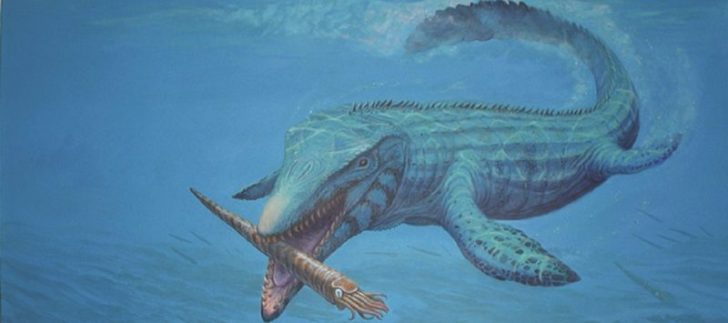
The News / Scientists originally described ‘Megamastax amblyodus’ in 2014 after studying isolated jaw fossils.
Even those fragments made waves because the fish measured about one meter long, making it the largest known jawed fish from the Silurian seas. At that time, most vertebrates were much smaller, and predators of that size were rare.
The jaw fossils showed sharp teeth along the edges of the mouth. They also revealed large semicircular bumps along the inner jaw surface. Researchers assumed those lumps were blunt crushing teeth used to break armored prey such as early shelled animals.
That interpretation seemed reasonable for years because the fossil record from this time period is frustratingly incomplete. Many Silurian vertebrates appear only as fragments, leaving scientists to piece together entire animals from scattered bones. The odd lumps on the jaw simply joined a long list of prehistoric mysteries.
Everything changed when researchers uncovered a nearly complete skull. The fossil preserved details that had never been seen before. Instead of confirming earlier ideas, the new specimen completely overturned them.
The Truth Behind the “Blunt Teeth”
The bumps on the jaw were not teeth at all. They turned out to be mounting points for something much stranger, structures scientists now call tooth cushions. These cushions acted like small bony pads that sat directly on those raised lumps.
Each cushion carried clusters of sharp fangs on its surface. Instead of neat rows of individual teeth, the fish had spike-covered plates lining parts of its mouth. The arrangement probably created a brutal gripping surface designed to trap struggling prey.
The skull also showed matching structures on the roof of the mouth. That design suggests prey would be pinned between the upper and lower cushions once the jaws snapped shut. Any animal caught between those fang clusters had almost no chance of escape.
This discovery changed the entire picture of how ‘Megamastax’ hunted. The fish likely seized prey with the sharp outer teeth, then crushed or pierced it using the fang plates deeper inside the mouth. That combination of weapons made it a powerful predator for its time.
A Puzzle Piece in Vertebrate Evolution
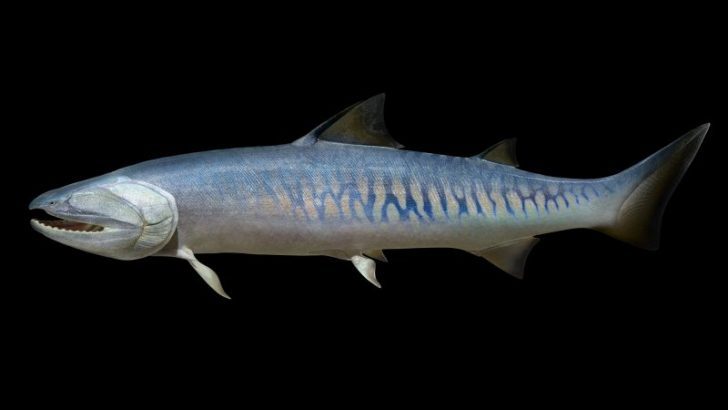
Conversation / The skeleton of ‘Megamastax’ mixes traits from several early vertebrate groups. That blend offers valuable clues about how major fish lineages evolved.
Parts of the skull resemble those of early bony fishes, especially the cheeks and gill covers. Those features connect the species to the group that eventually gave rise to modern fishes and land animals. At the same time, other bones look strikingly similar to those of placoderms, armored fishes that ruled ancient seas.
The skull roof and braincase structure carry several placoderm-like traits. These details suggest that early vertebrate evolution was not a neat series of separate branches. Instead, ancient species often carried combinations of features that later groups split apart.
The circulatory anatomy adds another surprise. The way major arteries branch at the back of the skull closely matches patterns seen in early shark relatives. That feature hints that some basic vertebrate body plans appeared earlier than scientists once believed.