How TikTok’s Agartha Videos Mix Meme Culture With Fringe Ideologies
A growing wave of short-form videos on TikTok is reshaping how obscure occult ideas circulate online. What looks like surreal entertainment—AI edits, fantasy landscapes, and meme-heavy clips—often carries layered ideological signals tied to hollow Earth theories and Nazi UFO lore.
At the center of this trend sits “Agartha,” a mythic underground world that has found unexpected reach across millions of feeds.
A striking example shows an AI-generated version of Adolf Hitler in Antarctica, smiling while holding a White Monster Energy drink from Monster Energy as “Down Under” by Men at Work plays in the background.
The scene feels absurd on the surface, yet it reflects a wider content pattern where extremist-coded ideas merge with meme culture and algorithm-friendly visuals.
Agartha Trend and the Digital Repackaging
The Agartha concept originates from post–Second World War esoteric writing that blended hollow Earth beliefs with imagined underground civilizations. Over time, it absorbed layers of “Aryan” purity myths, references to an occult SS, and speculation about Third Reich spacecraft.
On modern platforms like TikTok, the idea no longer appears as direct ideology. Instead, it takes the shape of stylized edits: glowing subterranean cities, fantasy warriors, and sci-fi landscapes that quietly reuse older extremist frameworks.
Literal belief in hollow Earth or Nazi UFO narratives is not the central driver. The real shift lies in aesthetics. These videos present ideology through visual mood, not explicit argument, making them easier to distribute and harder to moderate.
Viral AI Clips and Pop Culture Fusion
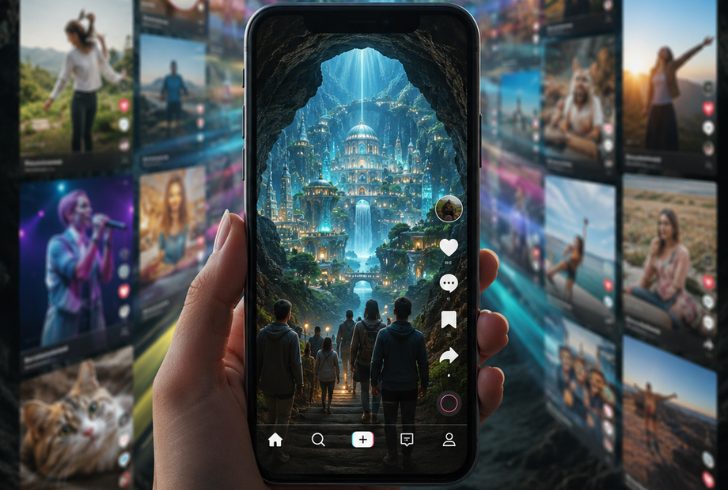
ChatGPT AI | Study shows 87% of Agartha TikTok content uses mainstream hashtags to bridge into everyday feeds.
A viral Agartha-themed video showing Hitler in Antarctica captures how far the aesthetic has drifted from traditional propaganda formats. The use of humor, surreal AI visuals, and pop references creates a layer of distance that masks underlying signals.
The inclusion of a Monster Energy drink from Monster Energy and the track “Down Under” by Men at Work is not random. These elements are widely recognized internet memes, making the content feel familiar while embedding fringe references underneath.
This blending produces a hybrid format where extremist-coded symbolism is packaged inside entertainment loops, increasing watch time and algorithmic reach.
A large-scale review of more than 43,000 Agartha-related TikTok videos reveals how structured the trend has become. This analysis, led by researchers at Neu-Ulm University of Applied Sciences, maps how content spreads and connects across communities.
One key finding shows that around 87% of Agartha-related connections rely on mainstream hashtags. These tags act as bridges into everyday feeds rather than isolated extremist spaces.
The research highlights four consistent tactics used to circulate these narratives across platforms:
Aesthetic Camouflage and Visual Disguise
Platform moderation systems often remove explicit extremist content quickly, so creators shift toward visual disguise. Generative AI plays a major role here, turning ideological concepts into fantasy-driven imagery.
Instead of direct messaging, Agartha videos often show glowing underground civilizations or stylized “Aryan” figures presented as elf-like beings. This framing softens perception and makes the idea of a white ethnostate appear less overt.
Because these visuals are engaging, viewers stay longer on the video. That increased watch time signals algorithms to distribute the content more widely, expanding reach without requiring explicit messaging.
Dog Whistles and Split-Second Symbols
Agartha content often embeds coded references that bypass casual detection. Some symbols appear briefly or only make sense to those already familiar with the code.
Examples identified in the network include:
“Raw milk,” used as a cultural marker linked to white supremacist messaging
The number “271,” associated with Holocaust denial references
Flash-frame appearances of the Hakenkreuz symbol, displayed for fractions of a second
These signals operate in layers. For general viewers, they pass unnoticed. For targeted audiences, they reinforce group identity. In some cases, the brief appearance of restricted symbols becomes a status marker within niche communities.
Network Bridges Across Mainstream Content
A key factor in Agartha’s spread is its ability to connect with unrelated content ecosystems. Analysis shows that 87% of its reach depends on mainstream hashtag integration.
Common tags like #roblox or #loganpaul are used to position videos inside popular feeds. Fitness-related communities, especially #gymtok, also serve as entry points. These spaces draw large, active audiences, which increases exposure potential.
Another pattern appears in targeting audiences interested in self-improvement trends such as “looksmaxxing,” a movement centered on extreme physical optimization. Hashtags tied to this trend often appear alongside Agartha content, shaping what type of viewer is likely to encounter it.
Weaponized Irony and Meme Integration
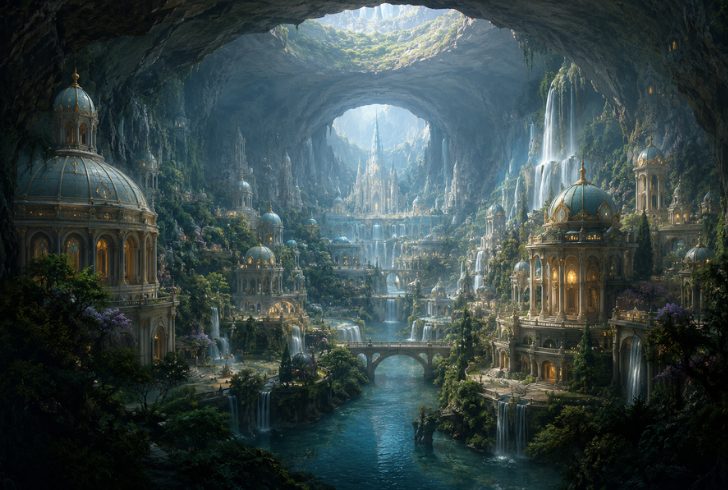
ChatGPT AI | Agartha trends show how extremist ideologies now camouflage within mainstream digital subcultures.
Much of the Agartha content relies on irony-heavy presentation. The AI-generated image of Hitler holding a Monster Energy drink from Monster Energy reflects this approach. The humor creates distance, making the content appear like satire rather than ideology.
The strategy extends to inserting mainstream personalities into surreal edits, including Logan Paul and Mads Mikkelsen. These associations blur the boundary between entertainment and ideological framing.
Music also plays a role. The repeated use of “Down Under” by Men at Work reinforces a subterranean theme while anchoring the content in a recognizable pop culture reference.
This layered irony offers plausible deniability. Content can be dismissed as humor, even when it carries embedded symbolic cues that circulate within specific online groups.
Broader Impact of Hybrid Online Spaces
The rise of Agartha-themed content reflects a shift in how ideological material spreads across short-video platforms. Instead of isolated extremist channels, content now moves through mixed environments where humor, fitness trends, gaming clips, and fantasy edits overlap.
This creates what researchers describe as hybrid spaces, where users transition between everyday entertainment and coded ideological content without clear boundaries. In such environments, exposure often happens gradually, shaped by algorithmic recommendations rather than direct intent.
The Agartha trend illustrates how visual style, meme culture, and coded symbolism can converge into a distribution system that reaches wide audiences. As a result, fringe narratives no longer remain on the margins of the internet. They circulate within mainstream feeds, wrapped in formats that feel familiar, fast, and easy to consume.