Trump Administration Reclassifies Medical Marijuana in Major Federal Shift
A major shift in U.S. drug policy is taking shape as state-licensed medical marijuana receives a new federal classification. The move signals a change in how cannabis is viewed at the national level, even though it stops short of full legalization.
With growing acceptance across states and rising demand for research, this decision reflects years of debate, pressure from advocates, and evolving public opinion.
On Thursday, acting Attorney General Todd Blanche signed an order that reclassifies state-licensed medical marijuana under federal law. The decision moves cannabis from Schedule I—reserved for substances with no accepted medical use and a high potential for abuse—to Schedule III, which carries fewer restrictions.
This change does not legalize marijuana for either medical or recreational use at the federal level. Instead, it reshapes how the substance is regulated. The shift reduces barriers for businesses, researchers, and healthcare providers working within state-approved systems.
Blanche described the move as a step toward expanding treatment options.
In his statement, he said the Department of Justice is “delivering on President Trump’s promise” and added, “This rescheduling action allows for research on the safety and efficacy of this substance, ultimately providing patients with better care and doctors with more reliable information.”
What the Reclassification Means
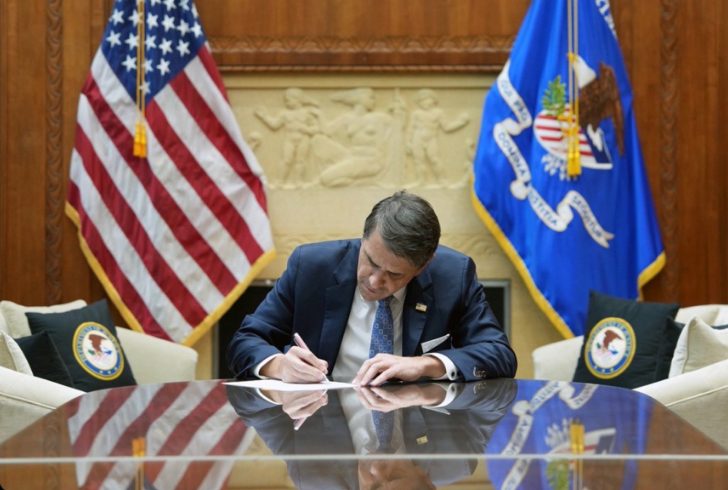
Instagram | groundnews | Todd Blanche signed an order shifting medical marijuana to Schedule III federal status.
The order brings immediate changes for state-licensed operators and researchers. It also signals broader federal recognition of medical marijuana programs already active across the country.
Key outcomes include:
1. State-approved medical marijuana programs gain stronger federal legitimacy
2. Licensed producers and distributors can register through an expedited process with the Drug Enforcement Administration
3. Researchers can access cannabis without fear of federal penalties
4. Businesses can now deduct expenses on federal taxes, a financial benefit previously denied
The tax provision stands out. For years, cannabis companies operating legally under state law faced heavy financial pressure due to federal tax restrictions. This adjustment could reshape the economic outlook for the industry.
In addition, any marijuana-derived medicine approved by the Food and Drug Administration now aligns with the Schedule III classification.
A Long Road to Federal Recognition
This policy shift reflects a broader trend across the United States. Since California first approved medical marijuana in 1996, state-level programs have expanded steadily. Today, 40 states operate medical marijuana systems. Two dozen states, along with Washington, D.C., allow recreational use. Eight others permit low-THC cannabis or CBD oil for medical purposes. Only Idaho and Kansas continue to ban marijuana entirely.
Blanche acknowledged this progress, noting that most states now maintain structured licensing systems. These frameworks regulate cultivation, processing, distribution, and dispensing. He emphasized that these systems have shown the ability to protect public health while limiting illegal activity.
Despite these developments, federal law has remained largely unchanged since the Marihuana Tax Act of 1937. While Congress has blocked the Justice Department from targeting state medical marijuana programs since 2015, cannabis has still been classified among the most restricted substances—until now.
Trump Administration Pushes for Action
The reclassification effort gained momentum under President Donald Trump. In December, Trump instructed his administration to move quickly on the issue. By Saturday, while signing an unrelated executive order focused on psychedelics, he voiced frustration over delays.
The administration also announced plans to begin a broader review of marijuana classification. A hearing is scheduled for late June, signaling that further changes could follow.
Blanche’s order takes a unique legal route. It bypasses the traditional review process by using a provision that allows the attorney general to determine drug classifications tied to international treaty obligations. This approach speeds up implementation but raises questions about how future regulatory steps will unfold.
Mixed Reactions From Advocates and Critics
Supporters of cannabis reform see the move as a milestone. Michael Bronstein, president of the American Trade Association for Cannabis and Hemp, called it “the most significant federal advancement in cannabis policy in over 50 years.” He added, “This action recognizes what Americans have long known, cannabis is medicine.”
Still, the decision has drawn criticism from opponents of legalization. Kevin Sabet, CEO of Smart Approaches to Marijuana, raised concerns about the broader impact. While acknowledging the need for research, he argued that the policy sends the wrong message.
“There are many ways to increase our knowledge without giving a tax break to Big Weed and sending a confusing message about marijuana’s harms,” Sabet said. In a sharper critique, he added, “With this move, we are now confronted with the most pro-drug administration in our history. Policy is now being dictated by marijuana CEOs, psychedelics investors, and podcasters in active addiction.”
These contrasting views highlight an ongoing divide in national drug policy discussions.
What Stays the Same

Freepik | Federal medical marijuana reform creates a middle ground for economic progress without reaching full legalization.
While the reclassification introduces meaningful changes, several restrictions remain in place. Marijuana products that are not part of state-licensed medical programs continue to fall under Schedule I. This means federal penalties still apply in those cases.
Schedule III substances are defined as having a moderate to low potential for physical and psychological dependence. Even so, concerns persist about the strength of modern cannabis products. Some critics argue that higher potency levels require closer study rather than looser classification.
The impact on states with both medical and recreational markets remains uncertain. In Washington state, for example, hundreds of licensed stores serve both groups. Many of these locations offer tax-free cannabis products to registered medical patients, creating a complex regulatory overlap.
The Broader Political Context
The reclassification effort began before Trump’s current term. Under President Joe Biden, the Justice Department proposed a similar change and received nearly 43,000 public comments. The Drug Enforcement Administration was still reviewing the proposal when Trump took office again.
Trump’s directive accelerated the process, pushing federal agencies to act more quickly.
At the same time, opposition within his own party remains strong. More than 20 Republican senators, including several close allies, previously urged him to maintain existing marijuana restrictions.
Trump has also taken a firm stance against other drugs, especially fentanyl. His administration has ordered military action against vessels suspected of drug trafficking and issued an executive order labeling fentanyl as a weapon of mass destruction. This contrast shows a targeted approach rather than a broad shift toward drug leniency.
The reclassification of state-licensed medical marijuana marks a turning point in federal drug policy. It aligns federal regulation more closely with state-level practices while opening doors for research and economic growth. At the same time, it stops short of legalization and leaves key restrictions in place.
As hearings approach and further reviews begin, the future of marijuana policy remains in motion. The latest decision adds momentum to a long-running debate, shaping how cannabis will be regulated, studied, and understood across the United States.