Unraveling Stellar Mysteries: The Magnetic Heartbeat of Red Giants
Our cosmic clock is ticking, and in a few billion years, the sun will transform into a red giant, reshaping the fate of our solar system. While this may sound like a catastrophic scenario for Earth, red giants are celestial goldmines for astrophysicists eager to understand the mysteries hidden within stars, particularly their magnetic fields.
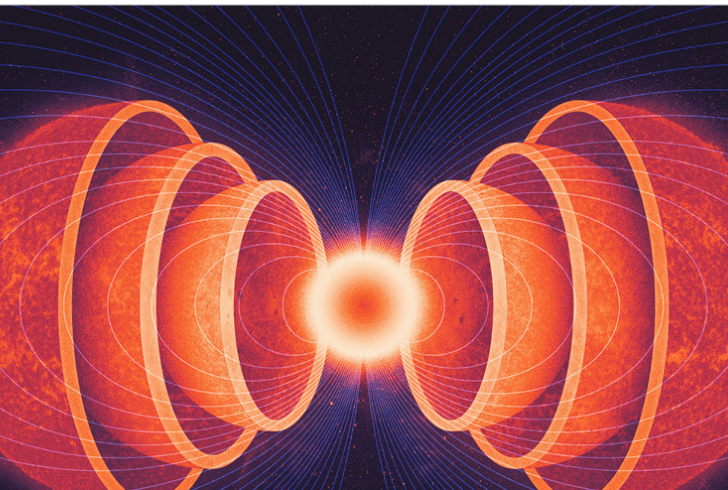
Instagram | Red giants are celestial goldmines for astrophysicists.
Stars, much like people, have hearts. But instead of pumping blood, stars pulsate with magnetic energy, influencing their evolution. The challenge lies in decoding the magnetic fields deep within a star’s core, a task made possible by the rhythmic dance of starquakes on the surface.
Red Giants: Cosmic Time Capsules
Big stars called red giants might be dangerous for planets, but they are super interesting for scientists. These old stars have tiny movements on their surface, like gentle shakes. This lets scientists look inside their magnetic hearts. Tim Bedding, an asteroseismologist, says these movements are really good for exploring what’s deep inside the star’s core. It’s like having a special key to open up the secrets of these giant stars.
Stellar Sonar: Asteroseismology Unveils Secrets
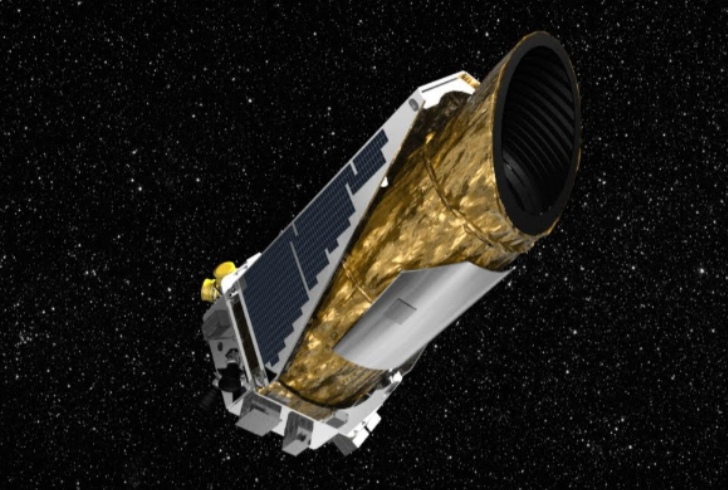
Instagram | Utilizing data from NASA’s Kepler telescope, scientists detect the minute changes in starlight.
Asteroseismology, akin to Earth’s seismic studies, serves as our stellar sonar. Utilizing data from NASA’s Kepler telescope, scientists detect the minute changes in starlight caused by stellar oscillations. These oscillations come in two flavors: acoustic pressure modes (p-modes) and gravity modes (g-modes). For red giants, the interaction of these modes produces a mixed mode—a key to unlocking the star’s magnetic mysteries.
A Symphony of Stars: Decoding Magnetic Fields
In an amazing study, scientists at the University of Toulouse looked closely at big stars observed by Kepler and found out surprising things about the magnetic fields in the hearts of red giants. They discovered that these magnetic fields are incredibly strong—much stronger than a regular fridge magnet, about “2,000 times” stronger! One of the red giants even had a mixed-mode signal that went backward, suggesting we might figure out which way the magnetic fields are pointing. This is super important for making our models better when we study how stars change over time.
Stellar Age: More Than Just a Number
This exciting time of new discoveries about stars, thanks to starquakes, is very important. Finding out how old stars are, with the help of their internal magnetism, can help us answer big questions about the universe. Whether we’re looking for signs of life on planets outside our solar system or figuring out how galaxies change over time, knowing the age of a star is crucial.
Beyond Giants: Exploring Stellar Ages Across the Cosmos

Instagram | Conny Aerts-astrophysicist at KU Leuven.
The study of magnetic fields within stellar hearts is in its infancy, leaving room for imagination and discovery. Conny Aerts, an astrophysicist at KU Leuven, highlights the beauty in the unknown, emphasizing that nature’s creativity surpasses human imagination.
As we gaze into the cosmos, guided by the stellar symphony of red giants, we’re not merely witnessing the fate of distant stars but unraveling the very fabric of our celestial existence. Starquakes, once harbingers of doom, have become cosmic keys, unlocking the secrets of stellar magnetism and rewriting the narrative of our place in the universe.