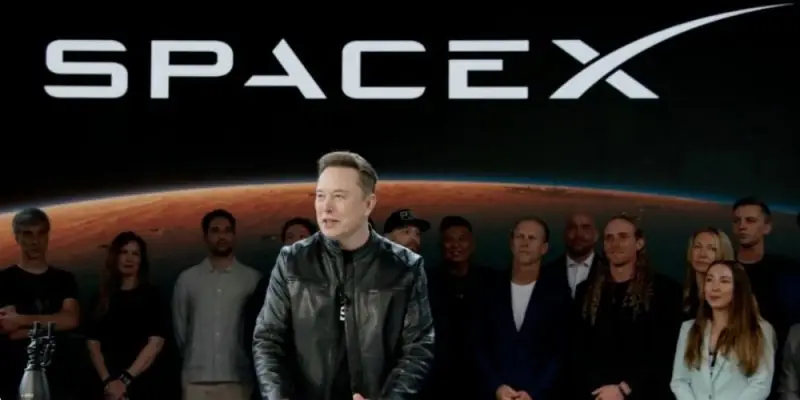
Space exploration company SpaceX is entering a defining moment as trading begins on the Nasdaq following the largest IPO ever recorded.
Investors poured $75 billion into the public offering, pushing the company’s valuation to nearly $1.77 trillion and turning the listing into one of Wall Street’s most closely watched events of the decade.
The debut places Elon Musk at the center of another financial milestone. It also raises a major question for investors: can SpaceX justify a valuation that now rivals the biggest technology companies in the world despite posting steep annual losses?
A Record-Breaking IPO Reshapes Wall Street
SpaceX priced its IPO at $135 per share and sold 555.56 million shares to investors. The deal raised more money than Saudi Aramco’s 2019 market debut, previously considered the largest IPO in history. The listing also made SpaceX the first U.S. company to cross the trillion-dollar mark at launch.
The company now ranks among the seven most valuable publicly traded businesses in the United States. That rise came even though SpaceX reported a loss of nearly $5 billion last year and generated significantly lower revenue than most companies with comparable market caps.
Trading is expected to begin later in the day as Nasdaq gathers buy and sell orders while underwriters attempt to stabilize demand. Market participants are paying close attention to the opening process after technical problems disrupted Meta’s 2012 debut and damaged investor confidence at the time.
SpaceX’s IPO is widely viewed as a test case for a new generation of large-scale tech listings tied to artificial intelligence, communications, and private space development.
The “Musk Premium” Faces a New Test
Investors and analysts continue to debate the influence of what many call the “Musk premium,” a term linked to the market enthusiasm surrounding Elon Musk-led companies such as Tesla.
That market confidence helped Tesla maintain a valuation above $1 trillion, despite periods of slowing sales and tighter competition in the electric vehicle market. Now, traders are watching whether the same investor belief can carry SpaceX through its first months as a public company.
The IPO also arrives at a critical time for the broader technology sector. Market analysts expect upcoming public offerings from AI firms Anthropic and OpenAI to draw comparisons with SpaceX’s performance. A strong debut could increase investor appetite for high-growth technology listings. A weak start could have the opposite effect.
Jay Woods, chief market strategist at Freedom Capital Markets, warned that retail investors may face higher risks if momentum fades after the launch.
“Historically, those investors tend to be the most vulnerable if momentum reverses,” Woods said. “I think there will be better opportunities to enter this name down the road.”
SpaceX reserved 30% of the IPO shares for retail investors, a move designed to capitalize on Musk’s popularity among individual traders who previously fueled large gains in Tesla shares.
SpaceX’s Expanding Market Opportunity
SpaceX believes its future extends far beyond rocket launches. The company estimates its addressable market at $28.5 trillion, calling it the largest commercial opportunity in history.
The business currently dominates private launch operations. According to company figures, SpaceX handled more than four-fifths of the total mass launched into orbit globally during the last three years. Its Starlink satellite network also continues to expand as demand for global internet connectivity rises.
John Belton, portfolio manager at Gabelli Funds, compared SpaceX’s structure to Tesla’s because both companies combine established revenue streams with ambitious long-term projects.
“For Tesla, that’s things like humanoid robotics and other future applications. For SpaceX, it’s the AI business,” Belton said.
That comparison highlights how investors increasingly value future technological potential rather than present-day earnings alone.
Competition and Valuation Concerns Remain
Despite the excitement surrounding the IPO, some analysts argue that SpaceX’s valuation has moved far ahead of financial fundamentals.
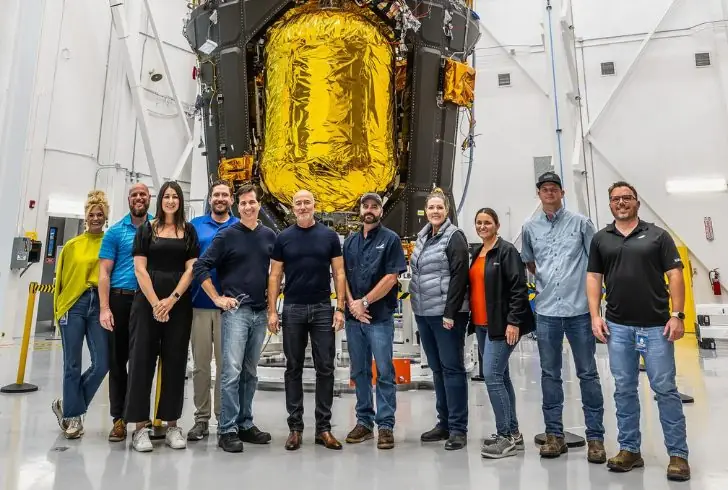
Morningstar analysts recently estimated the company’s fair value closer to $780 billion, less than half of its opening market capitalization. Critics point to rising competition from companies such as Blue Origin, founded by Jeff Bezos, as the commercial space industry expands into satellite services, defense contracts, and future off-world infrastructure.
SpaceX also faces pressure to maintain rapid growth while balancing expensive long-term projects tied to artificial intelligence and communications technology.
Nancy Tengler, CEO and CIO of Laffer Tengler Investments, compared the company’s position to Amazon during its early years.
“This is not a name you’re buying based on fundamentals. For me, the analogy is Amazon. This was a company that changed the way we live,” Tengler said. “If the IPO comes out at $135 and the stock drops to $100, that’s not ideal, but it wouldn’t change our long-term view. We want to participate.”
Nasdaq 100 Inclusion Could Fuel More Demand
Another major factor driving investor interest is SpaceX’s expected entry into the Nasdaq 100 index. Under Nasdaq’s updated fast-track inclusion rules, the company could join the index within about a month instead of waiting up to a year.
That addition would likely force index funds and ETFs tracking the Nasdaq 100 to purchase large amounts of SpaceX stock, creating another wave of demand.
Some market analysts believe that process may also trigger portfolio reshuffling across the technology sector, leading investors to reduce positions in existing tech giants as they move capital into SpaceX shares.
SpaceX’s Nasdaq debut marks a major moment for both the space industry and the broader technology market. Investor interest remains high as the company pushes deeper into artificial intelligence, satellite communications, and commercial space operations.
Still, questions around profitability and its massive valuation continue to shape market sentiment. The company’s early trading performance will offer a clearer picture of how strongly investors believe in SpaceX’s long-term growth potential.