

On the momentous date of January 20, 2024, Japan etched its name in the annals of space history by successfully landing the Smart Lander for Investigating the Moon (SLIM) on the lunar surface. This exceptional achievement not only crowned Japan as the fifth nation to perform a moon landing but also showcased its emergent leadership in space technology, despite a significant hurdle with SLIM’s solar power system.
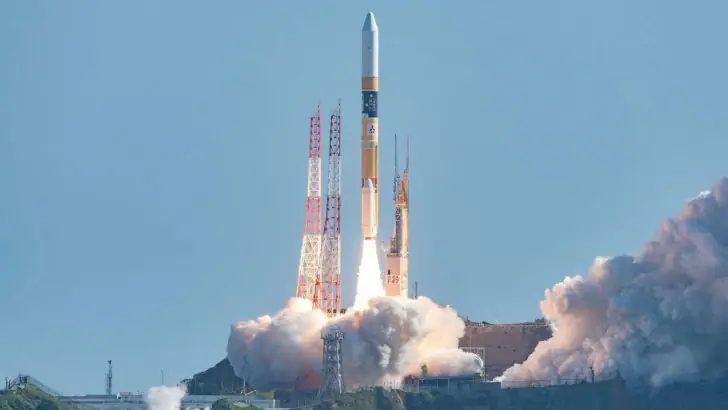
However, the SLIM mission was far from just another lunar expedition. It represented a bold statement of Japan’s advanced capabilities in space exploration. Although the lander faced a power issue, limiting its operational lifespan, the mission’s far-reaching achievements in space exploration technology overshadowed this challenge.
The Pinnacle of Precision: SLIM’s Landing Technology
At the heart of SLIM’s success lies its revolutionary precision-landing technology. This advancement is pivotal for space exploration, enabling landings on the Moon’s more challenging terrains. This capability is especially significant as future explorations aim to target precise locations on the Moon, including areas like the resource-rich South Pole.
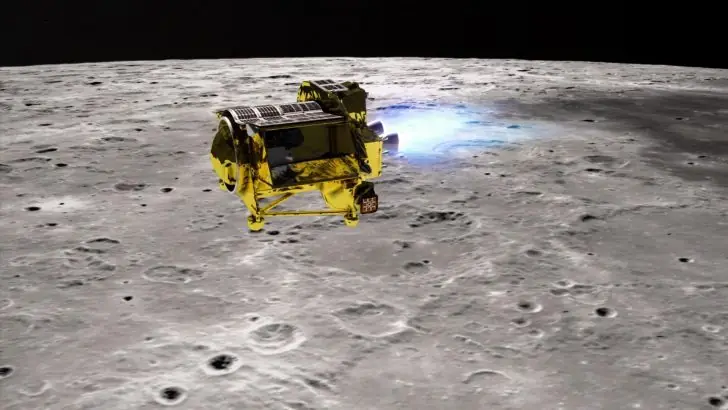
This system involved capturing detailed images of the lunar surface and comparing them in real-time with comprehensive lunar maps created from data from previous missions. This innovative approach allowed for an unprecedentedly precise landing within a 100-meter target zone, a substantial improvement over the kilometers-wide zones required by previous landers.
The Epitome of Japan’s Mobile Marvels
SLIM’s mission was further distinguished by the deployment of two rovers, each exemplifying Japan’s creative approach to space technology. The first rover, Lunar Excursion Vehicle 1, featured a camera and scientific gear, navigating the lunar terrain with a unique hopping mechanism.
Similarly, the second, Lunar Excursion Vehicle 2, is a product of collaborative efforts across government, academia, and industry. It was a compact sphere designed to roll across the Moon’s surface, an innovative approach to lunar mobility.
The Future of Lunar Expeditions
Japan’s breakthrough in precision landing technology is more than a mere technical achievement. It is a vital tool for future lunar exploration. With an increasing focus on specific lunar regions, particularly those believed to contain valuable resources such as ice, precision landing becomes essential for safe and effective exploration.

The successful landing of SLIM on the Moon solidifies Japan’s position as a significant player in the field of space exploration. This accomplishment not only underscores Japan’s technical expertise but also elevates its role in the international space community. Japan’s influence in future space collaborations and innovations has now been significantly amplified.
The Broader Impact of Japan’s Triumph
Japan’s SLIM mission, despite facing power constraints, represents a monumental milestone in space exploration. It signifies not just a technological victory for Japan. But a significant leap forward for mankind in our enduring quest to explore and understand the Moon.
The precision-landing technology of Japan opens new avenues for lunar exploration and resource utilization. So, as we look toward the future, Japan’s achievement shines as a symbol of innovation and exploration, heralding new chapters in our celestial journey.